
Program preview
ONE TREE
Explore one tree as part of a place, then ask what long-term care would require. Observation comes before planting.
6-day self-paced concept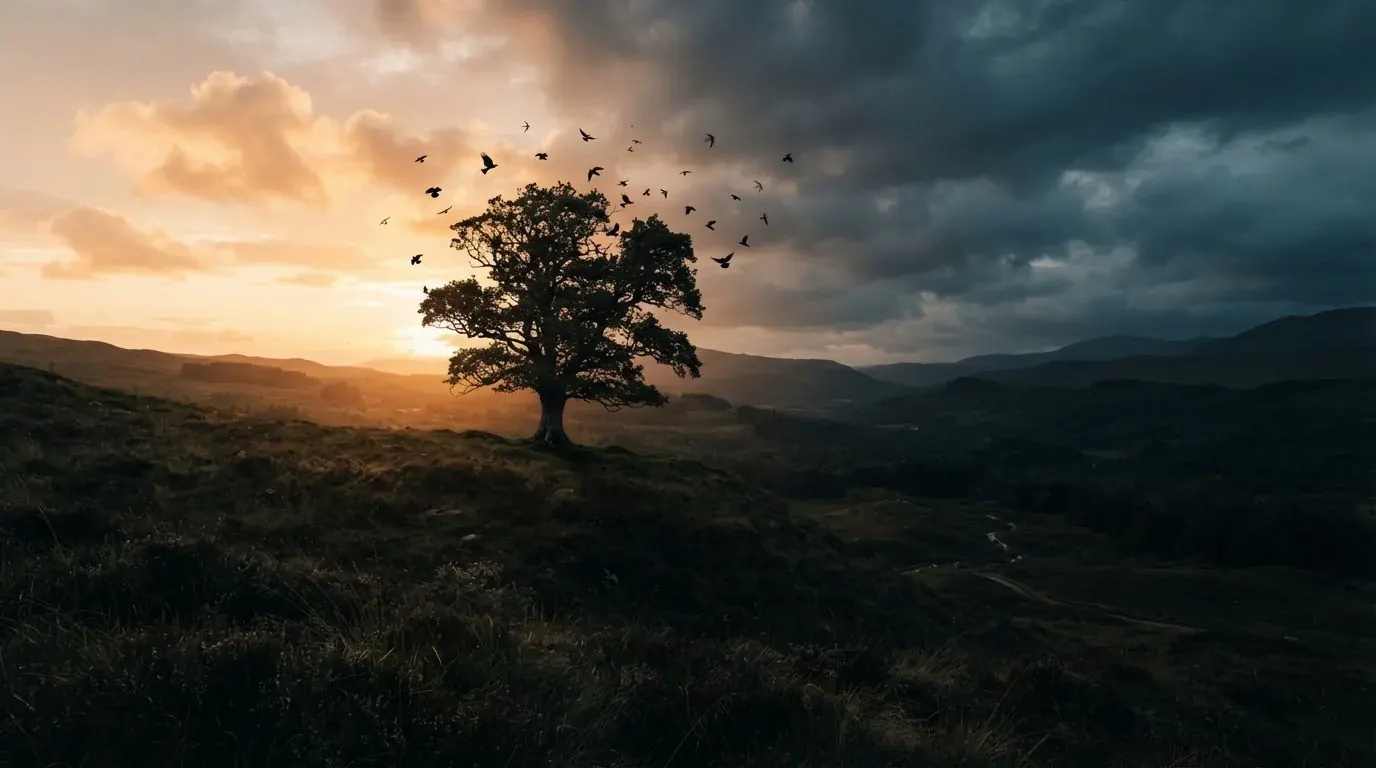
Illustrative campaign artwork
The idea
A practical starting point.
This sample pathway adapts the supplied six-day ONE TREE awareness concept into accessible observation and writing prompts. Use a tree visible from a safe public place, your window or the campaign artwork. Keep factual observations separate from imagination. This is not a tree sponsorship, verified restoration project or carbon-offset offer.
Choose your viewpoint
Select a safe, accessible place to observe. Describe the tree's setting without guessing its species, age or ownership. If you use artwork, label the entire exercise as imagined.
Look beyond the trunk
Notice the ground, nearby buildings and space around the canopy. Record what is visible. Do not infer root health or ecological condition from appearance alone.
Notice the shared space
Describe shade, paths and activity you can observe safely. Do not photograph identifiable people without permission or treat a single observation as a scientific study.
Write two possibilities
Imagine the place with continued care and with the tree absent. Label both passages as fiction. Avoid numerical cooling, carbon or biodiversity claims without suitable evidence.
Ask who cares for it
Find publicly available information about land ownership or tree maintenance. Note unanswered questions about access, water, upkeep and local ecological advice.
Make the care brief
Combine a short description, clearly marked imagined passages and one realistic question for the responsible land manager. Protecting existing trees may be more appropriate than proposing new planting.
What to take away
- A short story that separates observation from invention
- A better understanding of access and maintenance questions
- A care-focused brief rather than an unsupported planting promise
There is a place for your perspective
The next chapter
starts with your story.
A lived experience. A local idea. A question worth asking. Start where you are.