
Program preview
Waste to Life
Give an existing material a useful second life, starting with a real need rather than a new shopping list.
5-day self-paced concept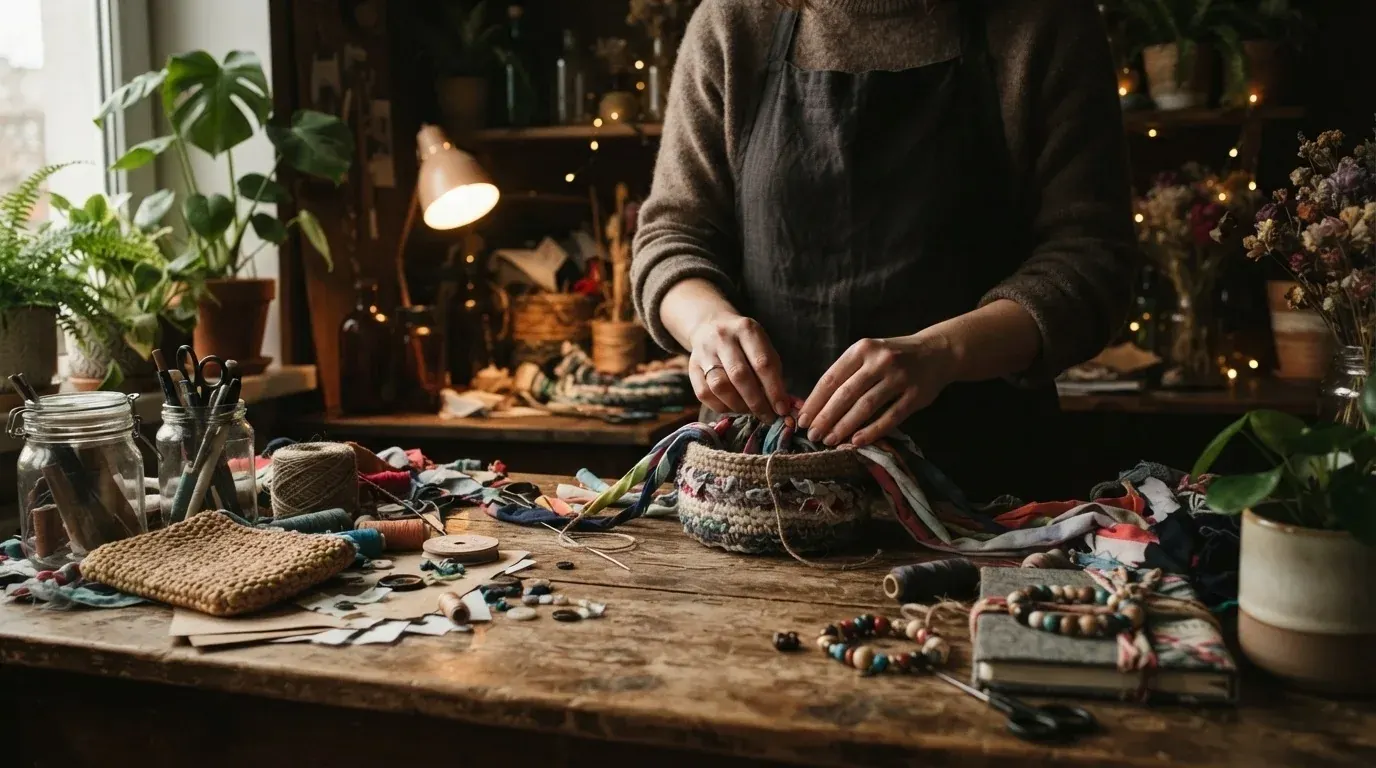
Illustrative campaign artwork
The idea
A practical starting point.
This sample five-day pathway develops the Waste to Life idea from the supplied platform concept. Work with clean materials you already own. The aim is a useful repair or reuse decision and a clear record of what you learned, not a claim of measured environmental impact. No registration or submission is required to explore the material.
Find the need
Choose a small household problem: a bag with a loose seam, papers without a folder, or an object needing a protective wrap. Check whether an existing item already solves it.
Choose safe materials
Set aside clean, dry fabric or plain cardboard from your own supplies. Sketch the simplest repair or reuse. Skip anything contaminated, sharp, electrical or chemically treated.
Make less, make it useful
Try a low-risk version, such as folding a cardboard divider or using fabric as a protective wrap. Avoid buying decorative supplies. Seek experienced help if tools or sewing are involved.
Test the function
Use the object for its intended ordinary purpose. Does it fit, stay stable and solve the original problem? Do not use improvised items for food contact, electrical work or load-bearing tasks.
Keep an honest record
Write down the original need, materials used, changes made and limitations. If it did not work, explain why. A useful lesson counts; no carbon or landfill-saving estimate is required.
What to take away
- A repair or reuse plan grounded in an actual need
- A simple check for material safety and usefulness
- A record of learning without unsupported impact claims
There is a place for your perspective
The next chapter
starts with your story.
A lived experience. A local idea. A question worth asking. Start where you are.